MrBeast documentary: a hybrid YouTube documentary with real interview cuts + 2D illustration
How the 14-minute 'How rich is MrBeast, really?' documentary was built: interview and behind-the-scenes cuts, flat 2D scenes, loop graphics that keep a repeated idea alive, and a millisecond voice-over fix.
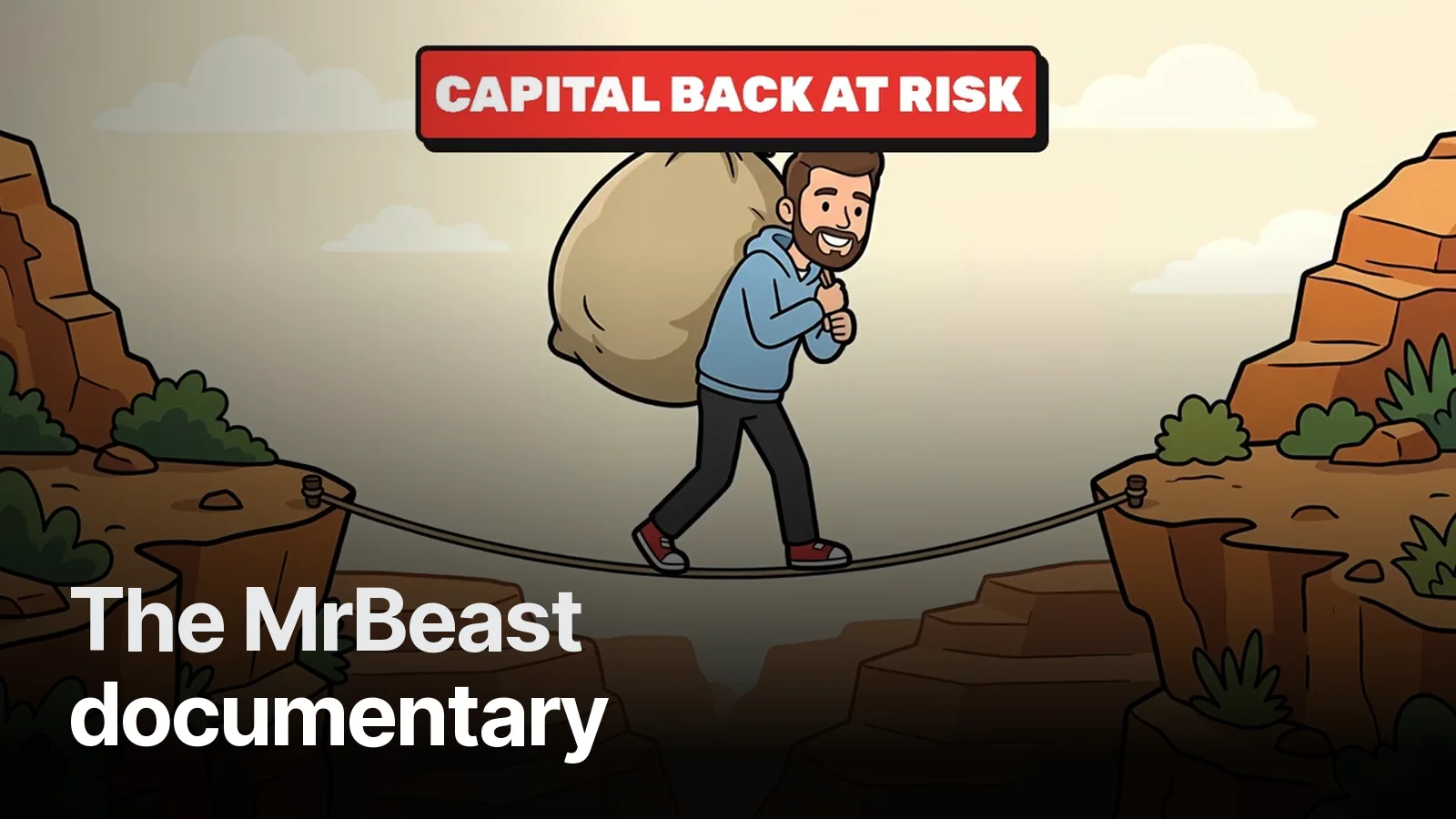
The fourth episode of an English-language finance channel, and in the channel’s words its flagship: “How rich is MrBeast, really?” A 13-and-a-half-minute voice-over about someone everyone knows. The risk with this kind of video is obvious: viewers already know MrBeast and may have heard the numbers somewhere. What keeps them watching is proof and rhythm.
Watch: MrBeast documentary
Real footage proves, illustration explains
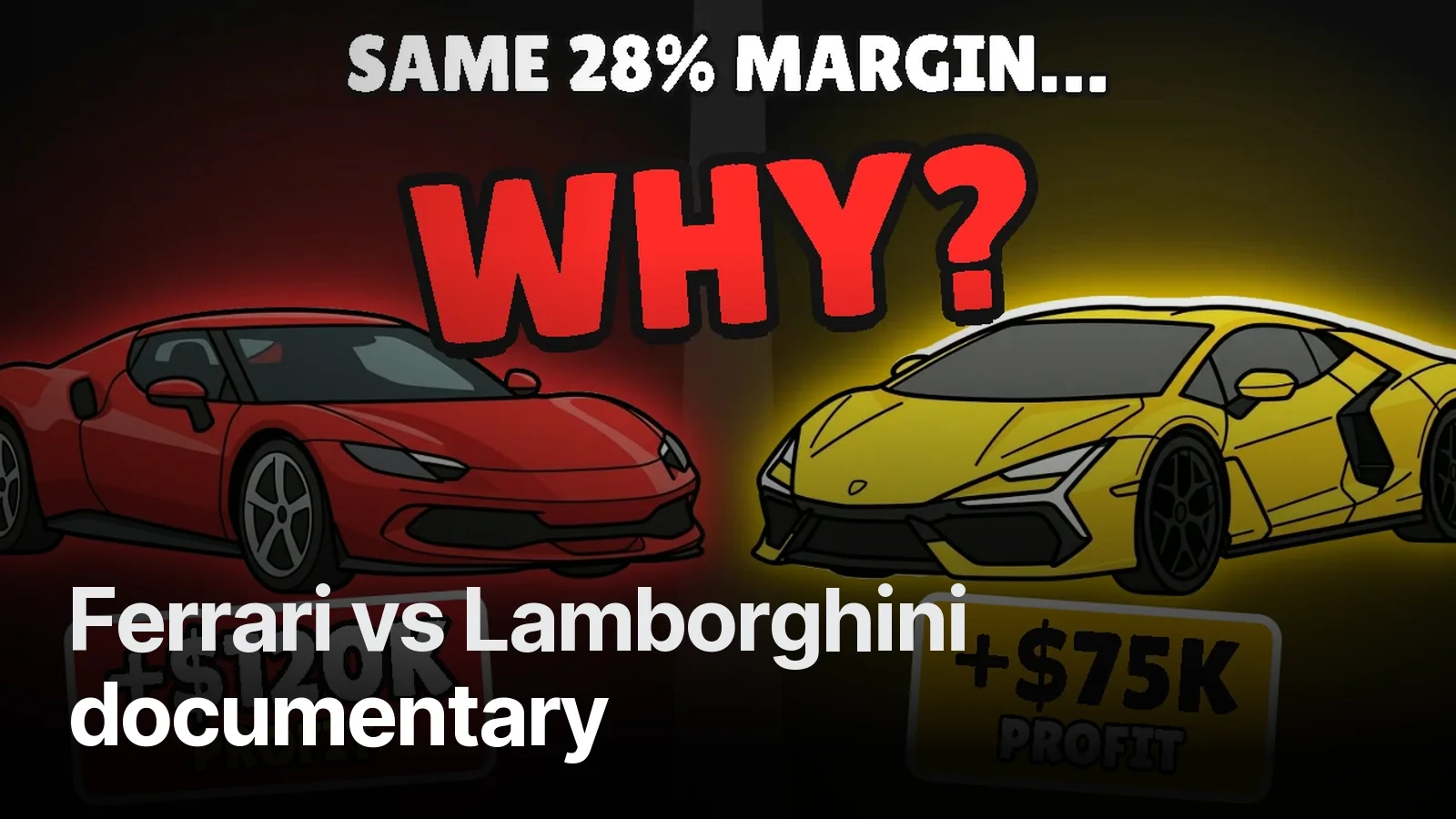
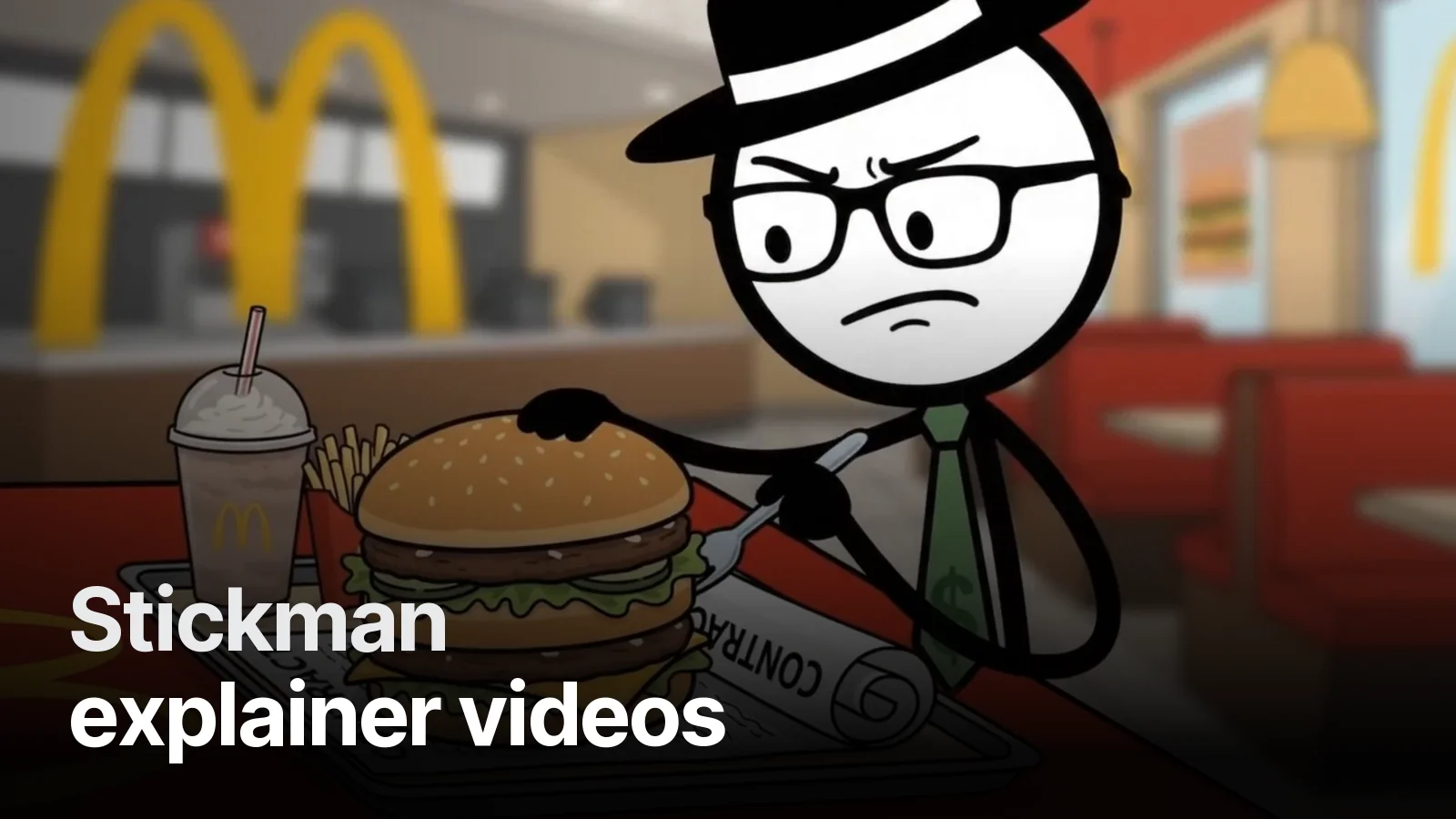
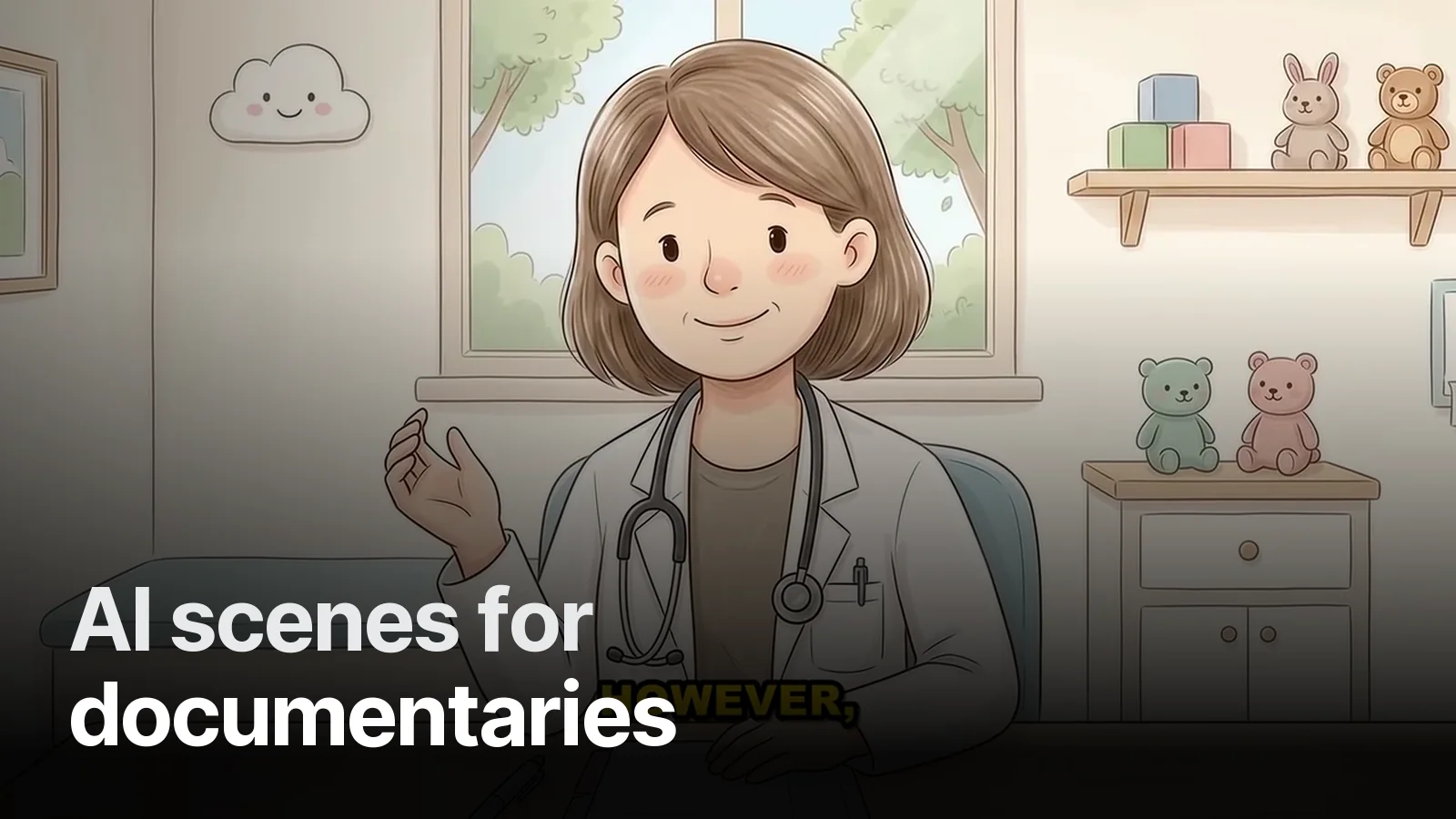
The channel’s earlier episodes (Ferrari vs Lamborghini, Boeing) were pure flat 2D illustration. Because this one is about a person, we built it hybrid:
- Real cuts (3–5 s): MrBeast’s own sentences from interviews — “a billionaire on paper?”, “I would have more money if I didn’t film it” — and Beast Games behind the scenes. Every cut carries a small source tag and the quote as text.
- Illustrated scenes: the Feastables chocolate factory, a $100M production as a camera spraying cash, two calculators arguing, a briefcase of money met with “not for sale”.
- Graphics: four cards side by side for media revenue, media loss, personal cash and valuation; a “50%+ stake” ring; figures that count up.
Real footage convinces, illustration explains. Keeping them apart matters: a figure was never written over interview footage.
Keeping a repeated idea alive
In the second half the script returns to the same idea three times: attention → product → profit → investment. Showing a static diagram three times would lose viewers. Instead we built a loop graphic: gears turn, arrows connect to the next step, each pass adds a new company logo and the system grows. The idea stays the same; the screen moves forward every time.
One slip in the voice-over
In the last quarter there was a roughly one-second stumble after the word “revenue”. Word timings can’t be trusted for this (automatic timing can drift 0.3–0.4 s); we found the cut point from the audio’s energy, to the millisecond, and joined it cleanly. Listeners don’t notice — which is the point.
Sound: music at a whisper
The brief was clear: music shouldn’t stop but should stay underneath, with voice-over and transition effects up front. A mysterious, slightly tense documentary ambience; whooshes and hits on scene changes. How we build the audio side: documentary voice-over: AI or human.
Thumbnail
On the channel’s previous video a number/curiosity thumbnail had won, so we prepared two directions for this one: the “billionaire?” question and the chocolate empire.
More documentaries: Video projects
Frequently asked
1.What is a hybrid documentary?
A documentary that mixes real footage (interviews, behind the scenes, news) with illustrated or graphic scenes in the same episode. Real footage convinces, illustration explains: the person says it in their own words, and numbers and processes are unpacked in drawings.
2.How long should real-footage cuts be?
Short: 3–5 seconds. A cut comes in to prove a quote, not to carry the story. A small on-screen tag naming the source sits alongside the quote text.
3.What do you do when the script repeats an idea?
Make the repetition move forward visually. In the MrBeast episode the 'attention → product → profit → investment' loop came back three times; each time the same wheel grew, a new logo joined and the arrows connected to the next step. Viewers see progress, not repetition.
4.Can I commission a documentary like this?
Yes. If your script or voice-over is ready, send it on WhatsApp; we reply within 24 hours with the visual language, scene count and delivery time.