Creature and enemy design for games: threat, weak points and room to animate
Designing game enemies and creatures: readable threat, weak points, size classes, animation-friendly anatomy, variations and game-ready delivery. A guide for stylised and realistic creatures.
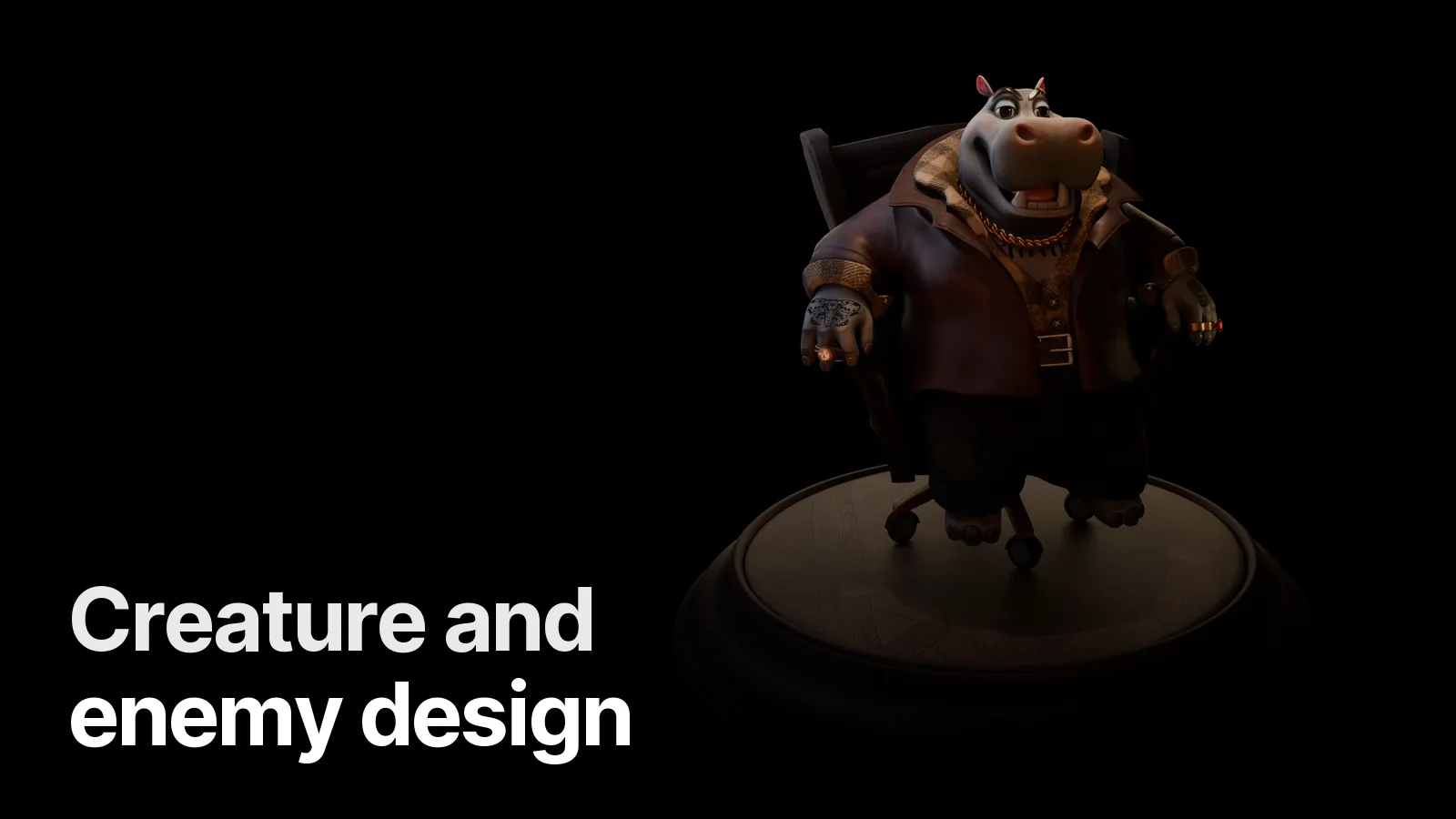
The enemy is the character that most needs to be read: one look should tell the player what it will do, how dangerous it is and where to hit it. The design says that, not the tutorial.
1. Role first
| Role | Shape language | Movement |
|---|---|---|
| Fast / swarm | Slim, leaning forward, small | Sudden, leaping |
| Tank | Wide, low, heavy | Slow, grounded |
| Ranged | Long limbs or mouth, keeps distance | Backing off |
| Boss | Big silhouette, layered parts | Changes by phase |
2. Threat readability
Sharp corners, a big mouth and red-orange accents say danger; round forms and pastels say safe. Mixing them on purpose (a cute creature that bites) can be the game's personality — but the player should get it by the second encounter.
3. The weak point
A glowing core, an exposed joint, the spot where armour ends. Shown with material and light contrast, so players read where to strike. In 3D this is usually a separate material or an emissive channel.
4. Anatomy that can animate
A beautiful creature that can't move is useless. While modelling:
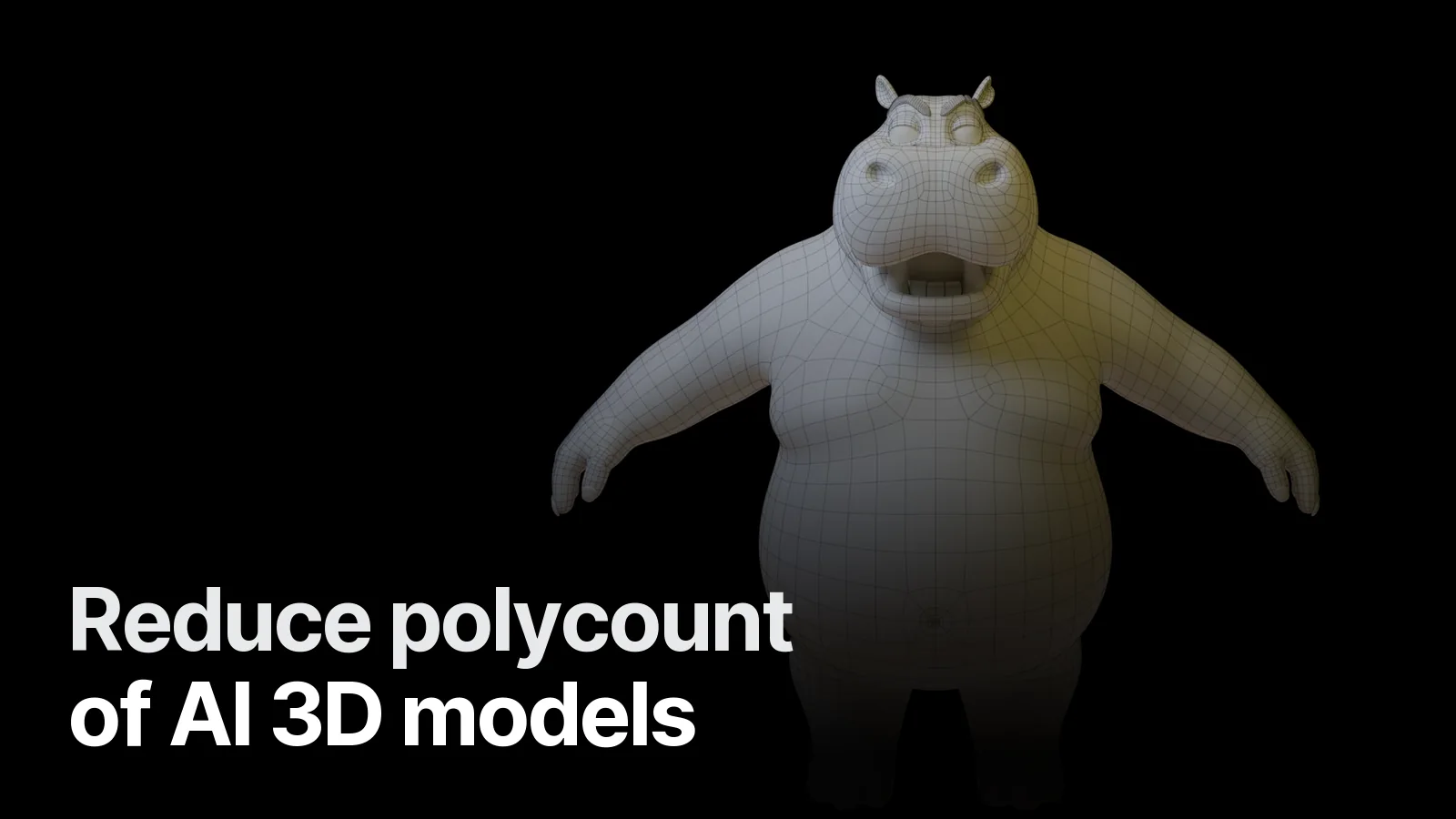
- Enough edge flow at the joints (elbow, knee, neck, jaw).
- Separate chains for tails, wings, tentacles.
- A symmetrical T or A pose.
- If the mouth opens, a modelled inner mouth and teeth.
That is why Mafia Hippo went through base mesh → sculpt → retopo; its wireframe is on the detail page and the process is in the case study.
5. Design with the environment
An enemy must not vanish into the scene's colours. A light-toned enemy in a dark graveyard, a dark one in a bright desert. In atmospheric scenes like Hell 06, the gargoyle and the portal light carry the scene's readability.
6. Variations: one mesh, many enemies
The budget-friendly route: one base mesh plus changes in colour, accessories, size and texture. Three or four variations come from one model, and players still feel they meet different enemies.
Delivery
FBX + GLB, PBR or hand-painted textures, LODs, rig and basic animation if needed (idle, walk, attack, death). Engines: Unity, Unreal, Godot. A single stylised creature usually takes 7–14 days, 3–4 weeks with rig and animation.
Send your enemy list and references: Game 3D & characters · our game projects.
Frequently asked
1.Where does a good game enemy start?
With its role in the game: what it does, how it challenges the player, how it is beaten. The look serves that role; a fast enemy is slim and leaning forward, a tank is wide and low to the ground.
2.How is a weak point shown in the design?
Through colour, light or material contrast: a glowing core, an exposed joint, the place where the armour ends. Players read where to hit from the design.
3.What does a creature model need for animation?
Enough edge flow at the joints, separately controllable extra limbs like wings, tails or tentacles, and a symmetrical T or A pose. The rig is built on top of that.
4.How are variations of the same enemy made?
From one base mesh with changes in colour, accessories, size and texture. Three or four variations come out of one model, keeping the game's budget intact.