Outsourcing 3D game art: how to brief a studio, approve in milestones and avoid rework
A practical guide for game developers outsourcing 3D characters, environments and props: what to put in the brief, milestones and approvals, file formats, IP and licensing, and the mistakes that cause rework.
Short answer: outsourcing 3D game art works when the brief answers four questions up front — what is the asset for, where is the camera, which engine and budget, and who approves — and when work is approved in small milestones instead of one big reveal. Most rework comes from missing budgets or vague style references, not from bad modelling.
When outsourcing makes sense
- Your team has programmers and a designer but no dedicated 3D artist.
- You need a burst of assets (a character roster, an environment kit) for a demo, a publisher pitch or a Steam page.
- Your in-house artists should focus on hero content while a partner builds props and set dressing.
- You need a specific skill for a short time: hard-surface, hand-painted textures, shaders.
The brief: what to send
| Item | Why it matters |
|---|---|
| Asset list with priorities | Lets the studio plan and quote accurately |
| Role and camera distance | A background prop and a hero weapon are different jobs |
| Engine, version, pipeline | Unity URP vs Unreal vs Godot changes texture packing and export |
| Platform and lowest device | Sets the poly and texture budget (mobile budgets) |
| Style references | 3–5 images from games you like beat any paragraph |
| Scale, naming, pivot rules | Avoids "why is it 100× too big" on import |
| Deadline and milestones | Keeps approvals regular |
Not sure about budgets? Say so — a good studio proposes them. Our game-ready 3D asset checklist lists every technical point we check before delivery.
Milestones that prevent rework
- Blockout — grey shapes at the correct scale, checked from the game camera. Cheap to change.
- Model — final forms and topology, wireframe shown.
- Textures — PBR, hand-painted or flat, shown in neutral light and in your engine where possible.
- Engine delivery — FBX/GLB, textures packed for your engine, LODs and collision if requested.
Approving the blockout is the biggest single time saver. A silhouette problem found at blockout costs an hour; found after texturing, it costs days.
Formats and handover
We deliver FBX and GLB, textures as PNG (or packed the way your engine expects — ORM for Unreal, Metallic-Smoothness for Unity), and the .blend source on request. Engine specifics: ordering 3D assets for Unity and Unreal and 3D assets for Godot.
IP, licences and confidentiality
- Agree in writing who owns the final assets. Our default: full commercial rights to the client on final payment.
- Ask the studio to tell you before using marketplace assets or AI-generated meshes inside deliverables — they can carry licence limits.
- An NDA before seeing an unannounced game is normal; we sign them.
Common mistakes
- No budget given → the studio guesses, the asset is too heavy, it gets rebuilt.
- Style described in words only → "stylised" means ten different things. See stylised vs realistic game art.
- All feedback at the end → one painful revision round instead of four small ones.
- Scale not specified → every asset needs fixing on import.
Working with Creatune
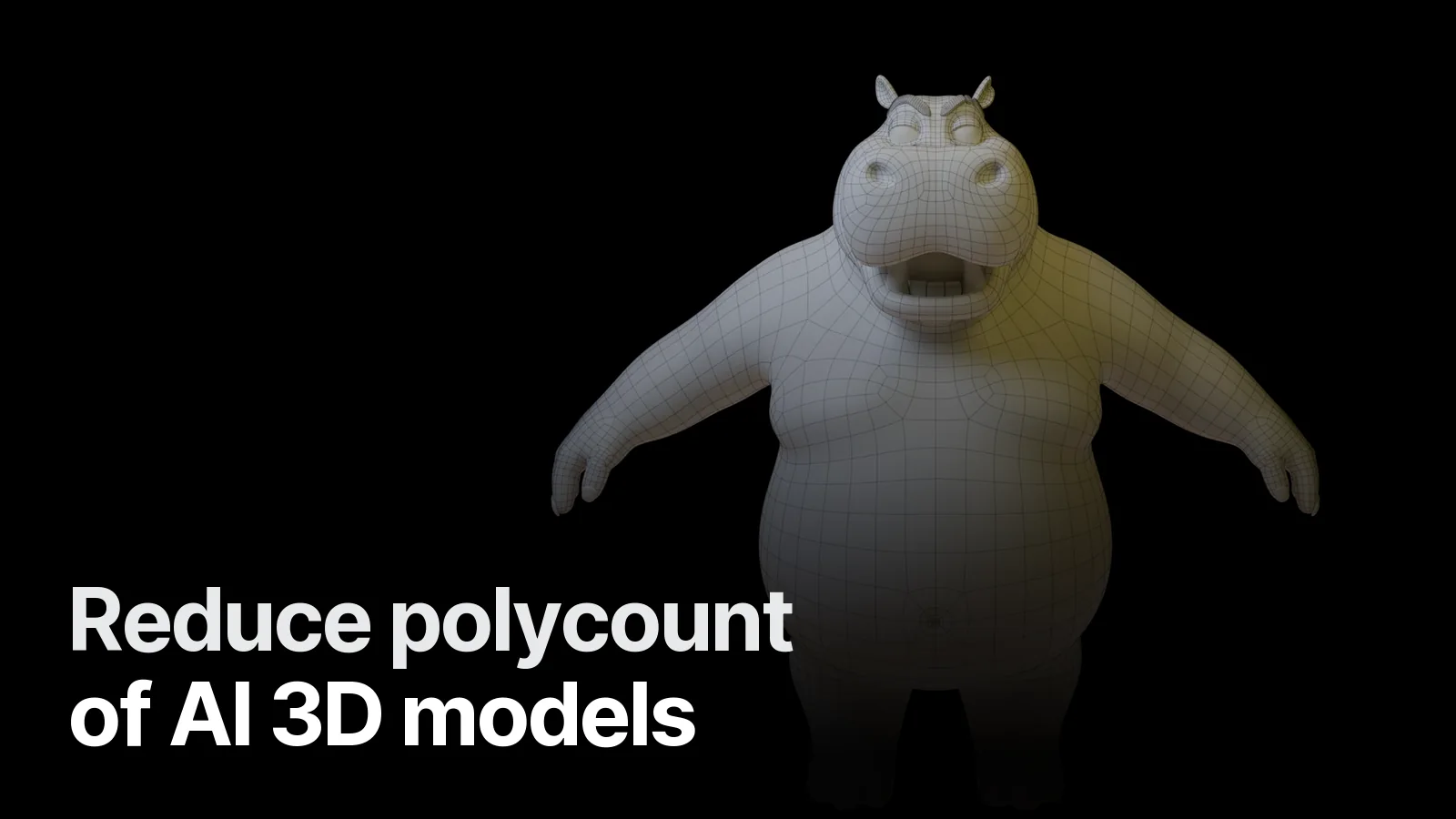
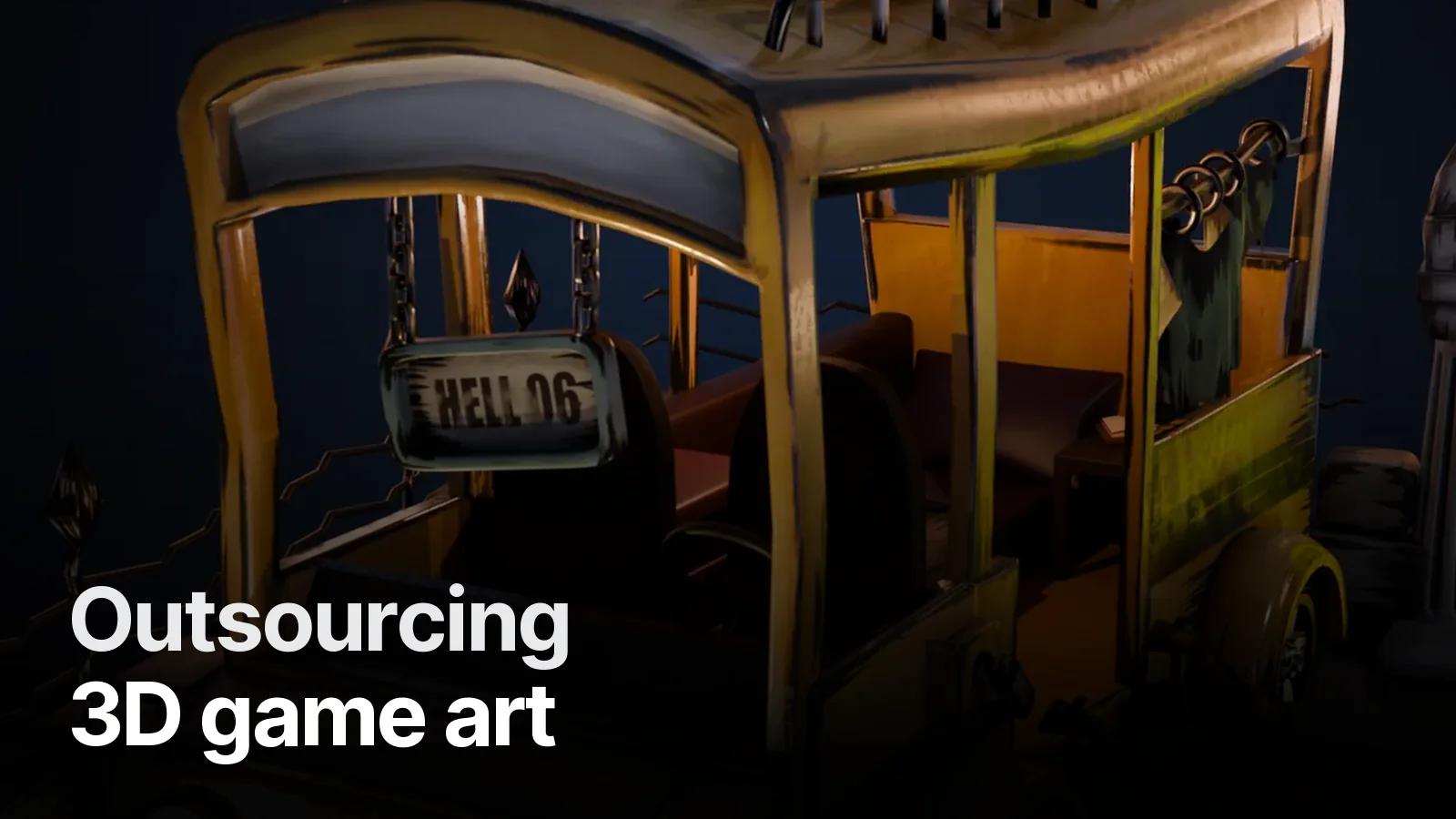
We are a small studio in Antalya, Türkiye, building game-ready characters, environments, props, materials and VFX in Blender for developers worldwide — in English, fully remote. Examples: Hell 06 (environment set), Isometric Sci-Fi Room, Mafia Hippo. See the Game & 3D page or send your asset list on WhatsApp for a scope and quote within 24 hours.
Frequently asked
1.What should a 3D game art brief include?
The asset list, each asset's role and camera distance, engine and render pipeline, target platform and lowest device, poly and texture budgets, style references, naming and scale conventions, the deadline, and who approves each milestone.
2.How are outsourced 3D assets approved?
In milestones: blockout, then model, then textures, then an engine test. Each milestone is approved before the next starts, which keeps revisions small. At Creatune the blockout is usually ready for approval within 1–2 days.
3.Who owns the IP of outsourced game art?
It should be written down before work starts. Our default is full commercial rights to the client for the delivered assets on final payment; we only ask permission to show the work in our portfolio, and we can work under NDA.
4.Can a studio in another country work with my team?
Yes. We work fully remotely with clients abroad over WhatsApp, email and shared drives, in English, with milestone previews as renders and turntables plus engine-ready files.