Indie game art on a budget: where to spend, where to save, and what players actually notice
A guide for indie developers planning 3D art spending: hero assets vs set dressing, style choices that save money, reuse and modular kits, what to outsource first, and what players notice in screenshots and trailers.
Short answer: spend on what the player sees most and what sells the game — the main character, the first playable area and your store-page visuals — and save on everything else with a consistent style, modular kits, shared materials and smart reuse. Players remember a strong identity, not a high prop count.
Where to spend
| Priority | Why |
|---|---|
| Player character | On screen 100% of the time; in every screenshot |
| Main enemies / NPCs | Define the feel of the game |
| First playable area | Reviews and streamers judge the first 10 minutes |
| Store page & trailer visuals | Capsule, key art, 5 screenshots — they decide wishlists (key art & store visuals) |
| One "wow" scene | The screenshot everyone shares |
Where to save
- Background props. Modular, atlas-textured, reused with colour variation. See low-poly models for mobile for the tricks.
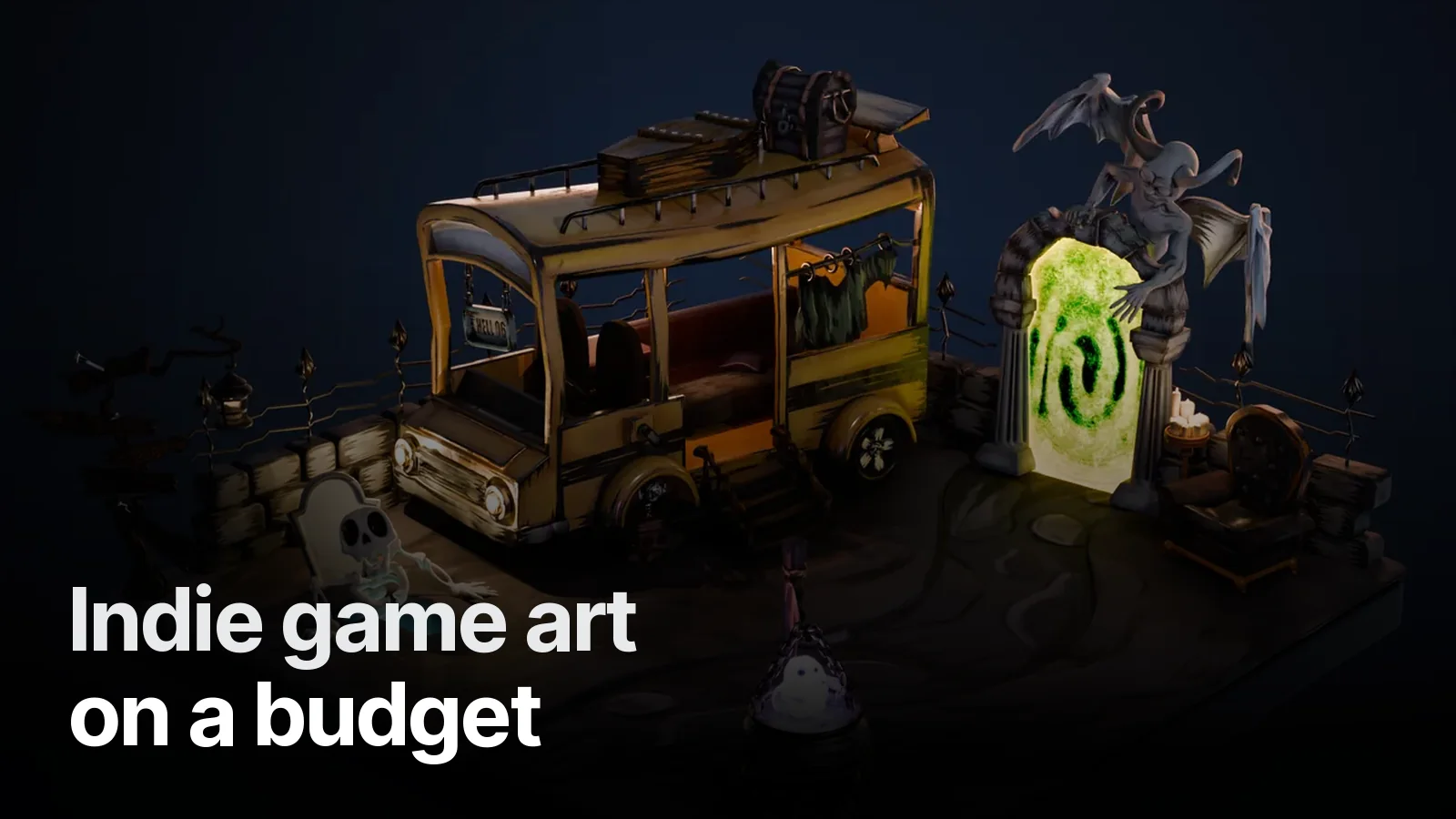
- Environment kits instead of unique scenes. 20–40 pieces snapped together can build dozens of rooms. Our Hell 06 diorama was built from modular pieces.
- Materials. A library of 10–15 shared materials and one or two trim sheets covers most hard-surface work.
- Detail density. Put detail where the camera goes; simplify corners the player never reaches.
Style is the biggest budget decision
A stylised game with clean shapes and a strong palette can look finished with far fewer assets than a realistic one. Pick the style your budget can sustain for the whole game, not just the vertical slice. Guide: stylised vs realistic game art.
What to outsource first
- The asset type your team is weakest at (often characters or rigging).
- A style test — one hero asset that sets the bar for the rest of the art.
- Bursts before milestones — a demo, a festival, a publisher pitch.
Keep what defines your game's feel (level design, lighting, final art pass) close to the team. More: outsourcing 3D game art.
What players actually notice
- A readable, likeable main character.
- Cohesion — everything looks like it belongs to one world.
- Lighting and colour more than polygon counts.
- Motion — idle animations, small loops, VFX. Even simple shader and VFX loops make a scene feel alive.
Working with us
We work with indie teams and solo developers worldwide, quoting per asset or per set, often starting with one test asset. See the Game & 3D page or send your asset list on WhatsApp.
Frequently asked
1.What should an indie team spend its art budget on first?
The player character, the first 10 minutes of gameplay, and anything that appears on the store page and trailer — capsule art, key art and the most-screenshotted scene.
2.How can indie games reduce 3D art costs?
Pick a style that fits the team (stylised is usually cheaper per asset), build modular environment kits, reuse materials and trim sheets, and use colour and lighting variation instead of new models.
3.Is it fine to use asset store models?
For background props, often yes — check the licence. For characters and hero assets, custom work is what makes the game recognisable. Mixed sources need a consistent art pass so they look like one game.
4.Does Creatune work with small indie teams?
Yes. We quote per asset or per set, can start with a single test asset, and work remotely with solo developers and small studios worldwide.